
One material palette. A more coherent store.
A practical way to bring floors, walls, fixtures and display details into the same conversation.
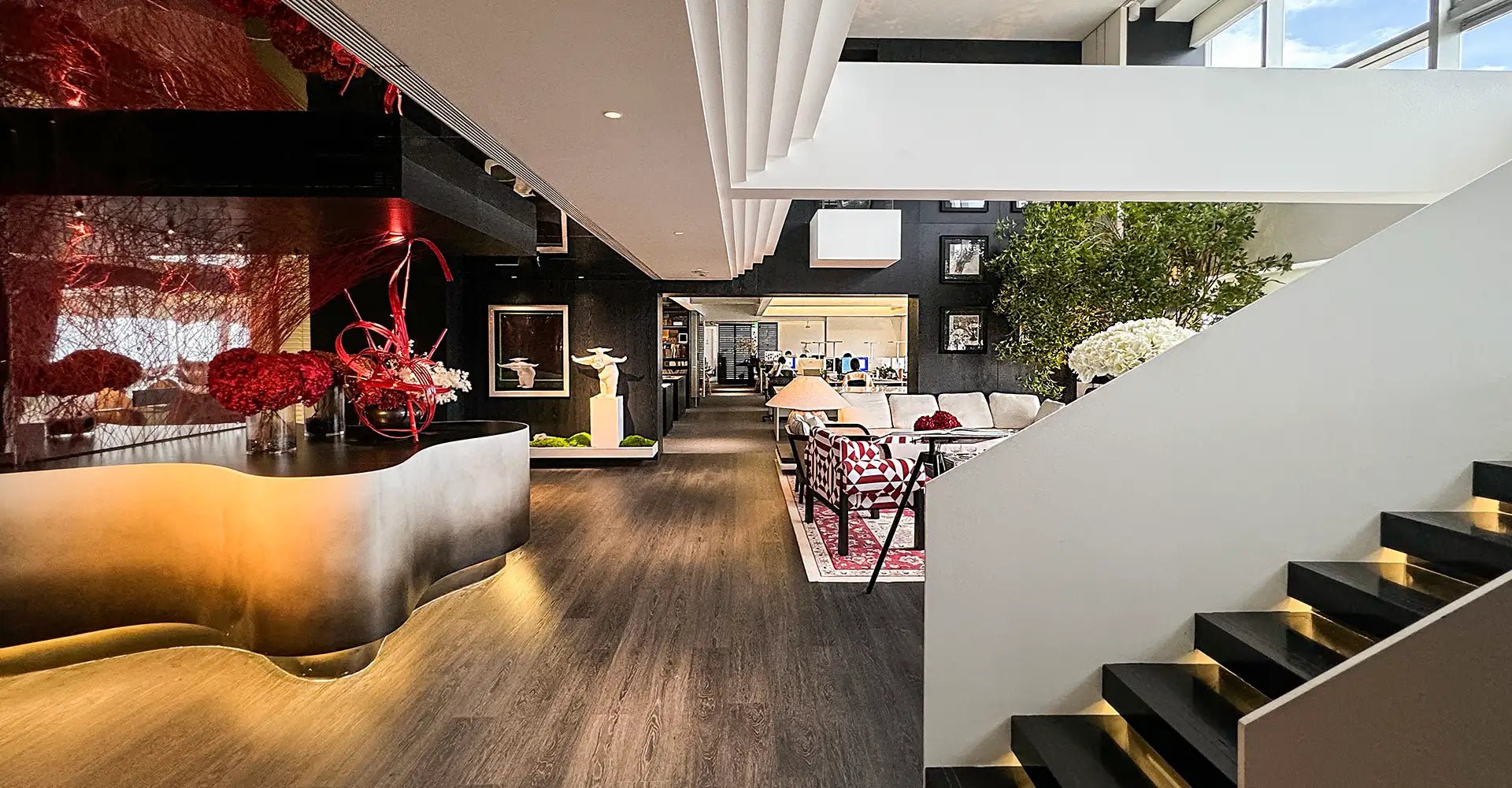
Choose the relationships first
Start with the surfaces customers will see together: flooring next to the showcase base, wall finishes behind the product, and hardware against the cabinet material. A successful palette depends on these relationships as much as on individual samples.
Select a few clear reference points for colour, texture and reflectivity. This helps suppliers understand the intended result while leaving room to compare practical alternatives.
Consider everyday use
A high-touch counter, a wall panel and a display lining have different jobs. Discuss cleaning, wear, moisture exposure and replacement needs for each application.
Provide any destination or landlord requirements that affect material selection. Ask for the relevant product information before confirming an option for a particular use.
Keep a shared material schedule
Record each selected material with its location, reference, finish and quantity. Include samples or photographs where helpful, and identify the items awaiting a decision.
Keeping this information together helps the designer, sourcing team and local contractor work from the same selection. Update the schedule whenever an approved choice changes.
Connect procurement with the programme
Review sample timing, order quantities and delivery requirements before making the final choice. A material that suits the design also needs to fit the procurement and installation sequence.
Where an alternative is needed, compare it against the agreed priorities and approve the change explicitly. That protects the intended appearance while keeping the project moving.
Ready to plan your project?
Share your floor plan, references and priorities. We will help define the next step.
Discuss Your Project ↗